
INSIDE INTELLIGENCE: WHY ELITE ORGANIZATIONS SUCCEED AND WHY THEY FAIL
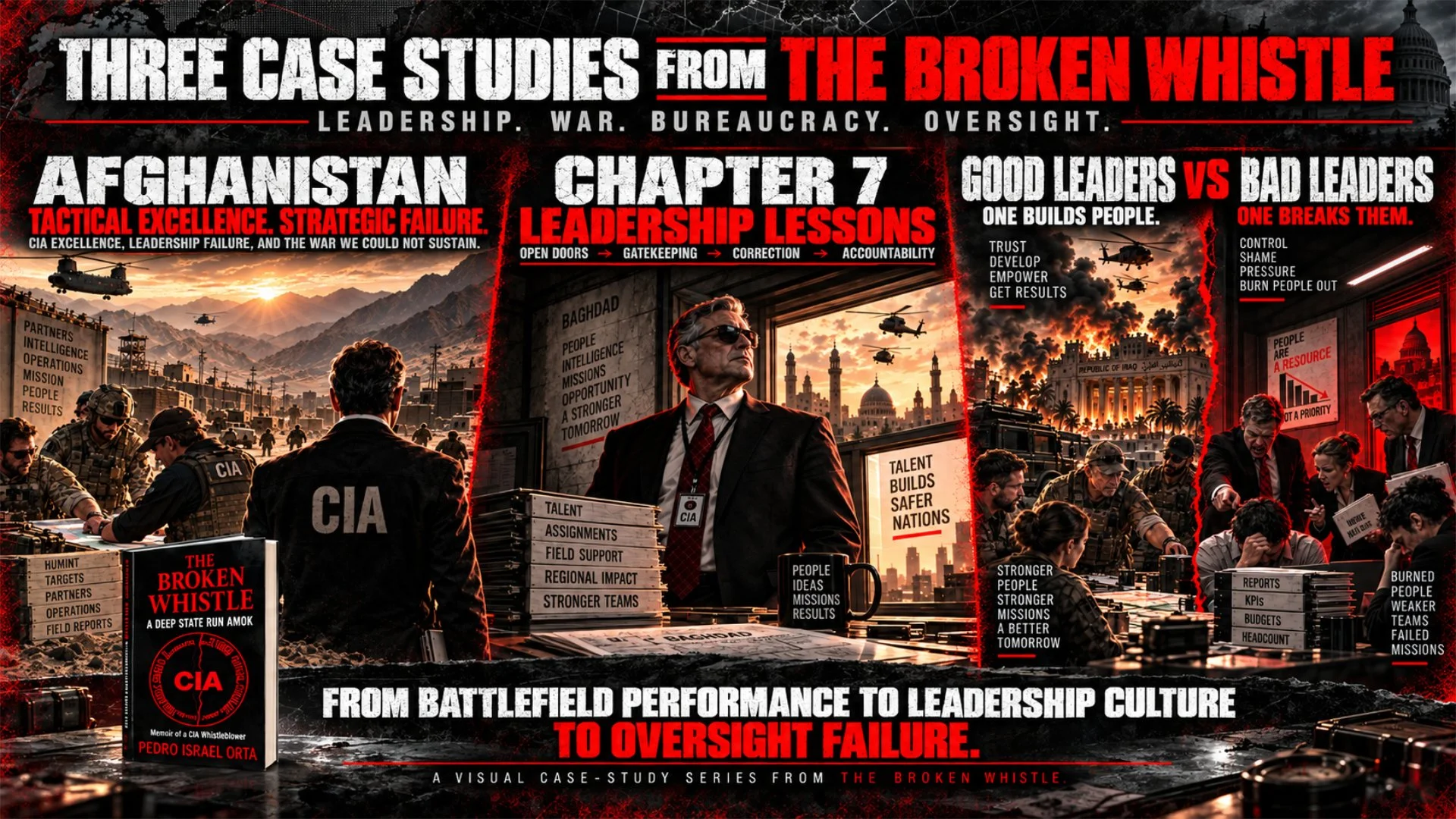
Why can the same intelligence organization produce exceptional results in one environment and serious dysfunction in another?
A new visual case-study series takes that question out of theory and into the field. Drawn from nearly two decades of firsthand service inside the U.S. Intelligence Community, the series compares high-performing wartime teams with stations marked by gatekeeping, favoritism, bureaucratic friction, and failed oversight.
The source material is The Broken Whistle: A Deep State Run Amok, the memoir of former CIA intelligence and operations officer Pedro Israel Orta. The project reorganizes episodes from the book into focused studies of leadership, organizational behavior, institutional risk, war-zone performance, and government accountability—then presents them as chapter-by-chapter infographics and short-form video. Notable reviews follow:
“A stand-out exposure of the haphazard organization of the Central Intelligence Agency. This proves to be a valuable book in understanding how our intelligence agencies are run and often mismanaged.”— Philip Zozzaro, San Francisco Book Review / Reedsy Discovery
“The Broken Whistle is more than an exposé; it is a discerning examination of the mechanisms of power, corruption, and the pursuit of truth and justice… a significant contribution to literature.”— Literary Titan
“For anyone trying to understand how power actually operates inside the intelligence community, and what it costs the people brave enough to challenge it, this book is essential and deeply unsettling reading.”— The Book Revue
A Tale of Two Stations
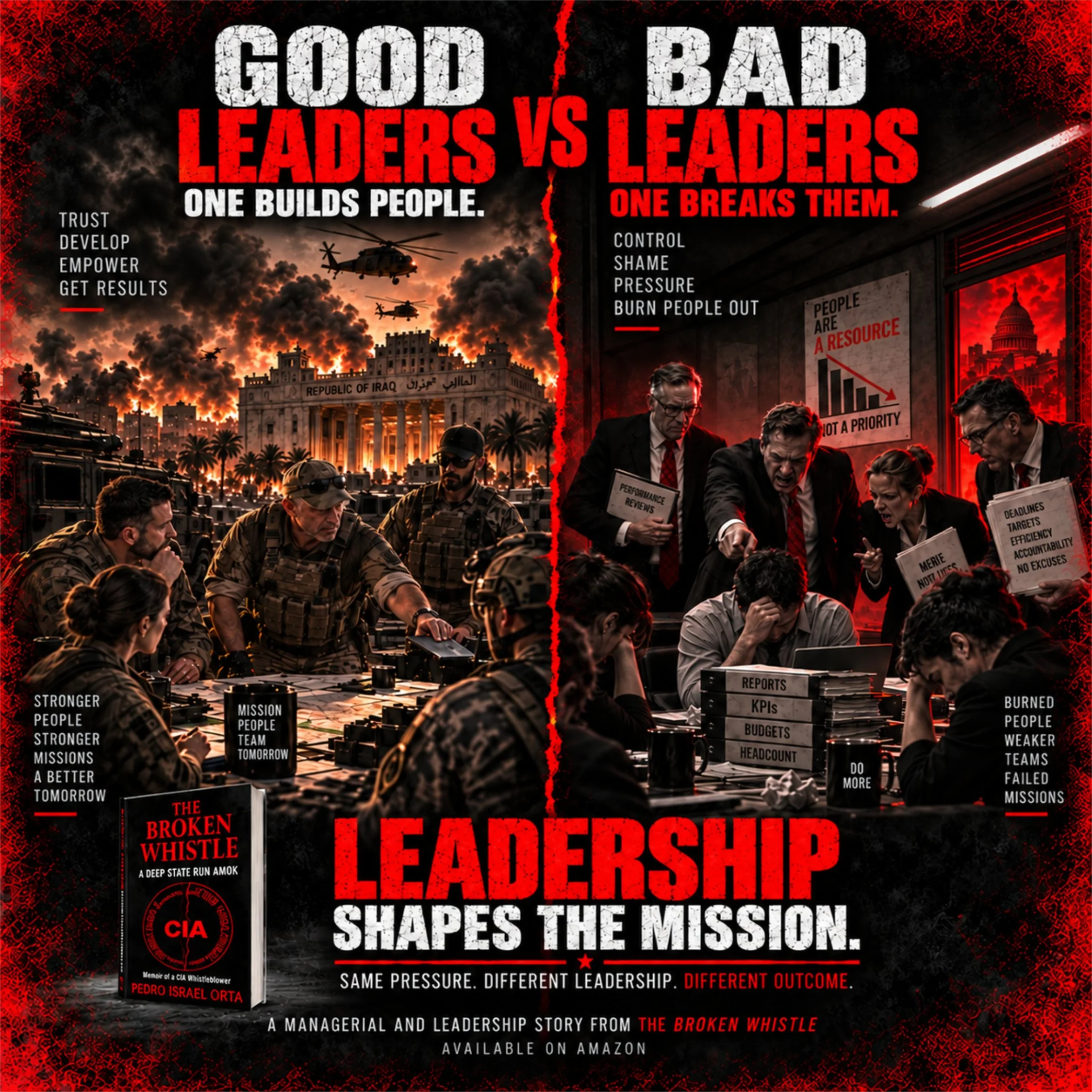
Orta’s Baghdad assignment is a case study in leadership under fire. Experienced officers were trusted. Talent was placed where it could succeed. Responsibility was delegated. Interagency partners were treated as assets, not obstacles. Mission requirements stayed at the center of decision-making. A war outside the station did not become a war inside it.
The chapters covering the book’s “Potemkin Station” describe the opposite model: risk aversion, micromanagement, ridicule in place of professional review, and managers who competed with their own people. Capable officers were sidelined. Energy that should have gone to the mission was consumed by internal politics.
The contrast is the point. Same agency. Same mission set. Different leadership. Radically different results. The series asks a question that travels far beyond intelligence work: What separates an institution that multiplies talent from one that burns it?
“There are many books about the CIA. What distinguishes this one is the density of firsthand institutional detail. Readers can examine the same organization operating extraordinarily well in one environment and struggling with serious management and accountability problems in another.”— Pedro Israel Orta
When Leaders Open Doors or Guard Turf
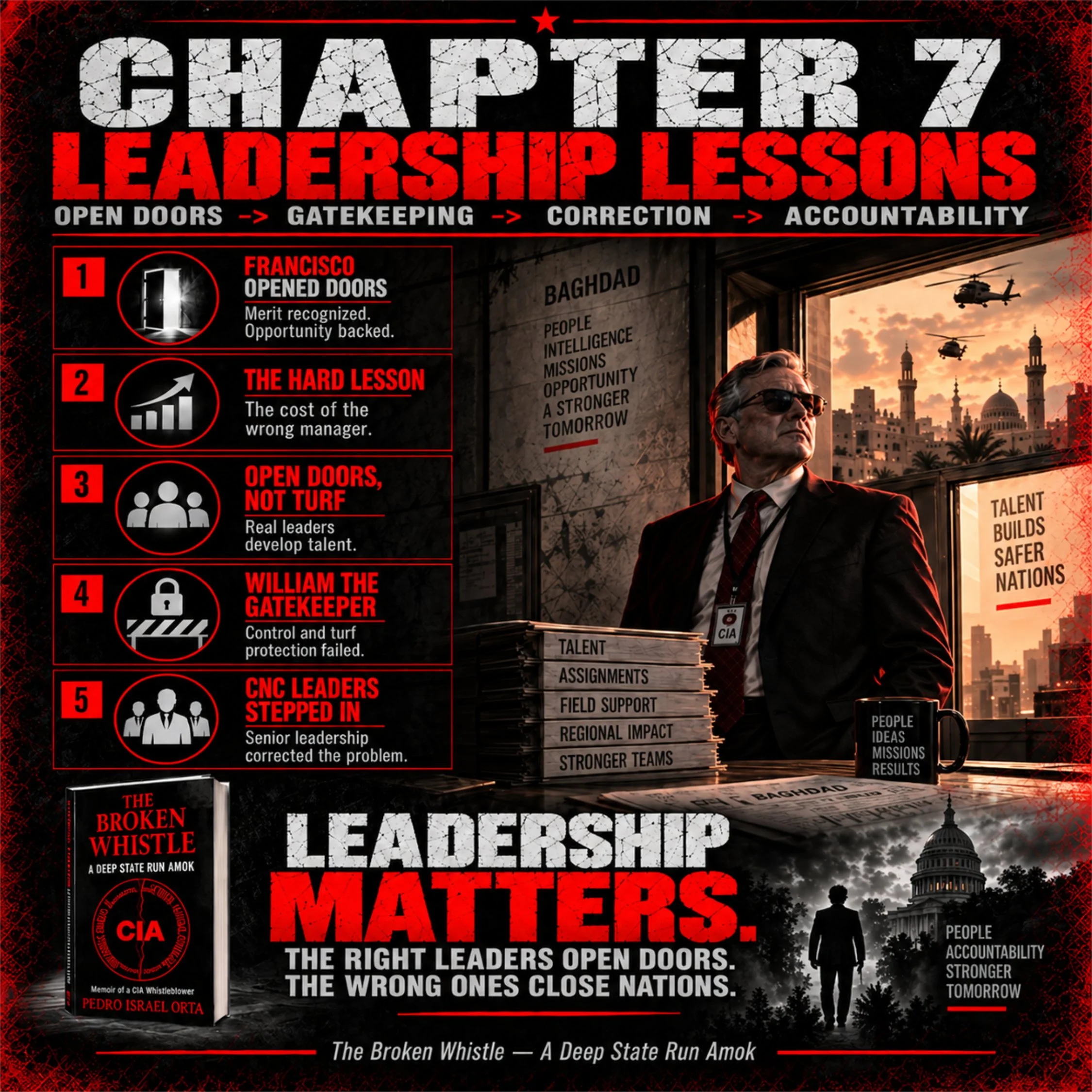
A separate case study drawn from Chapter 7 follows a career assignment that should have been a development opportunity. One senior leader recognized proven field performance and sponsored talent. Another treated the same assignment as personal turf, preferred his own candidate over demonstrated results, and turned a personnel decision into a power struggle. Senior leadership eventually intervened, but only after the conflict had already done damage.
The lesson is blunt: a great job under the wrong manager can become the wrong job. Real leaders develop people for the mission. Weak managers control people to protect themselves.
Afghanistan: Tactical Excellence. Strategic Failure
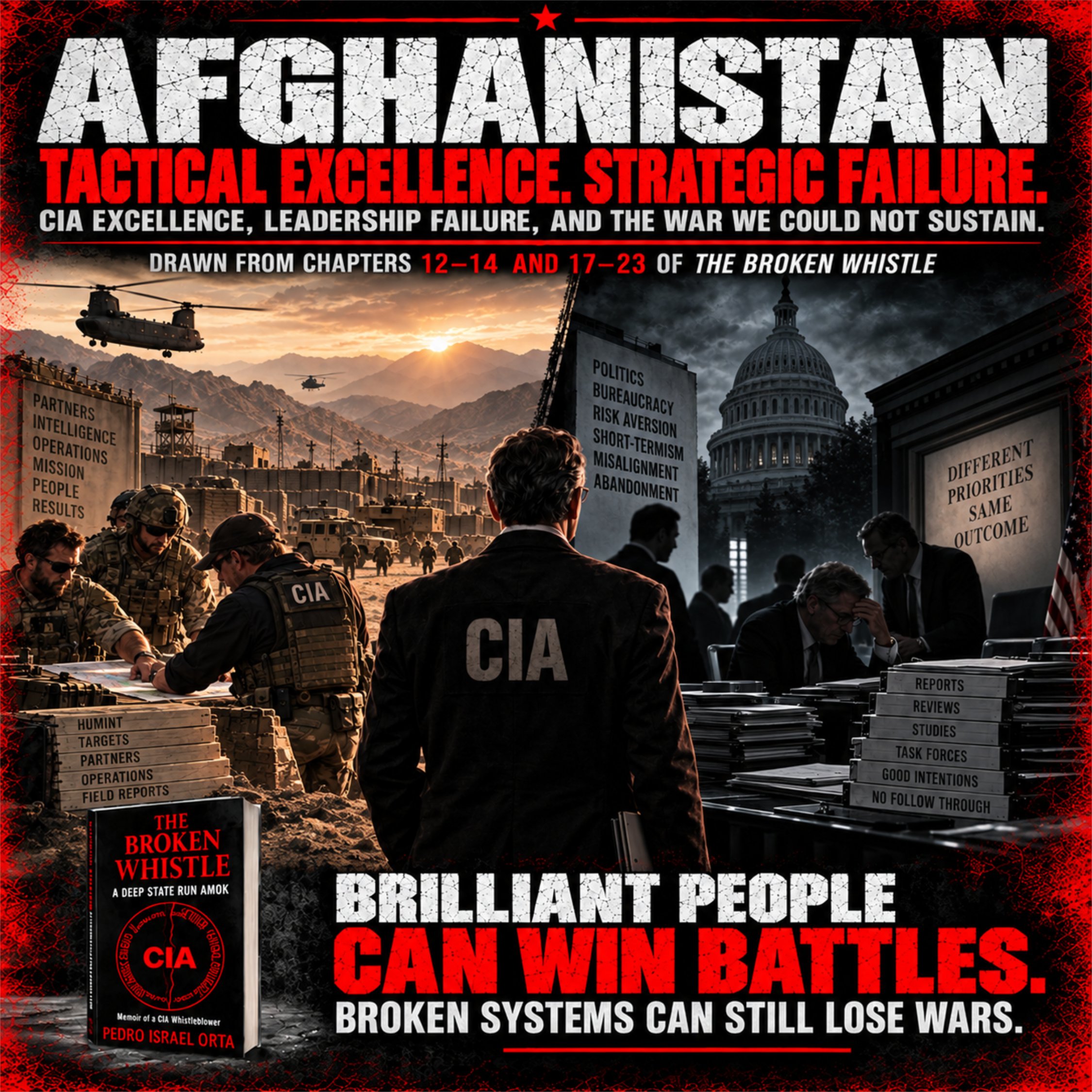
The Afghanistan material widens the lens from station leadership to institutional learning. Drawing on multiple periods of service connected to the war, the case studies examine counterintelligence, force protection, base security after Khowst, military relationships, and leadership under pressure. They also confront a harder problem: tactical victories that never became a durable strategy.
The same ground was fought over again. The intelligence existed. The experience existed. The history existed. The series asks whether the institution learned from any of it. As one of the studies puts it: brilliant people can win battles. Broken systems can still lose wars.
When Oversight becomes the Case Study
Later chapters shift from operations to the machinery built to police intelligence organizations. The series follows Orta’s account through internal reporting, CIA Headquarters, the CIA Inspector General, the Intelligence Community Inspector General, whistleblower procedures, reprisal allegations, investigations, and his termination from the Agency.
That arc raises the question used to introduce Chapter 19: Who watches the watchers? The project does not treat whistleblower retaliation as a private grievance. It treats it as an institutional-risk problem. What happens when systems designed to identify misconduct and protect lawful reporting are captured by bureaucratic incentives, internal relationships, or self-preservation?
For students of public administration, intelligence oversight, and organizational governance, the chapters offer an unusual insider view of accountability inside institutions built on secrecy, hierarchy, and extraordinary authority.
From Memoir to Teaching Tool
Taken together, the series tracks recurring themes: leadership under pressure; talent development versus turf protection; interagency trust; Iraq and Afghanistan lessons learned; institutional memory; bureaucratic politics; inspector-general oversight; and the human cost of prolonged national-security service.
Intended audiences include intelligence and national-security professionals, universities, think tanks, executive-education and management programs, public-administration scholars, institutional-risk specialists, and serious readers of espionage literature.
“The most useful question is not whether an institution is good or bad. The better question is why the same institution can produce extraordinary performance under one group of leaders and serious dysfunction under another.”— Pedro Israel Orta
The resulting lesson is straightforward. Strong people can produce extraordinary results inside government. Broken systems can still squander those results. The new infographic and short-form video series makes that argument chapter by chapter, turning a personal intelligence memoir into a study of leadership, institutional performance, and accountability inside one of the world’s most consequential government organizations.
The Broken Whistle: A Deep State Run Amok is available in hardcover, paperback, eBook, and audiobook editions. Review copies, interview availability, and high-resolution files of the visual case-study decks listed below are available in this hyperlinked text.
Available Visual Case Studies
Editors, producers, and educators may request the following decks with this release. Each is drawn from named chapters of The Broken Whistle and is available as print-ready infographics and short-form video.
1. A Tale of Two Stations: Baghdad vs. Potemkin (Chapters 5–12, 14). A station-level leadership comparison. Baghdad shows mission-first command, talent recognition, and interagency trust under fire. Potemkin shows micromanagement, favoritism, ridicule in place of review, and managers who competed with their own people. Includes the ten-point leadership scorecard.
2. Chapter 7 Leadership Lessons: Open Doors, Gatekeeping, Correction (Chapter 7). A personnel and sponsorship case study. One senior leader recognized field performance and opened a career door. Another treated the assignment as turf and resisted merit. Senior leadership later intervened—after the conflict had already done damage. Core line: a great job under the wrong manager can become the wrong job.
3. Afghanistan: Tactical Excellence, Strategic Failure (Chapters 12–14 and 17–23). Field studies covering Khowst and force protection, Gecko Base leadership, Kandahar’s recurring battlefield cycle, the 2014 base’s split between strong mission performance and weak local management, and the path from reporting to retaliation. Core line: brilliant people can win battles; broken systems can still lose wars.

