
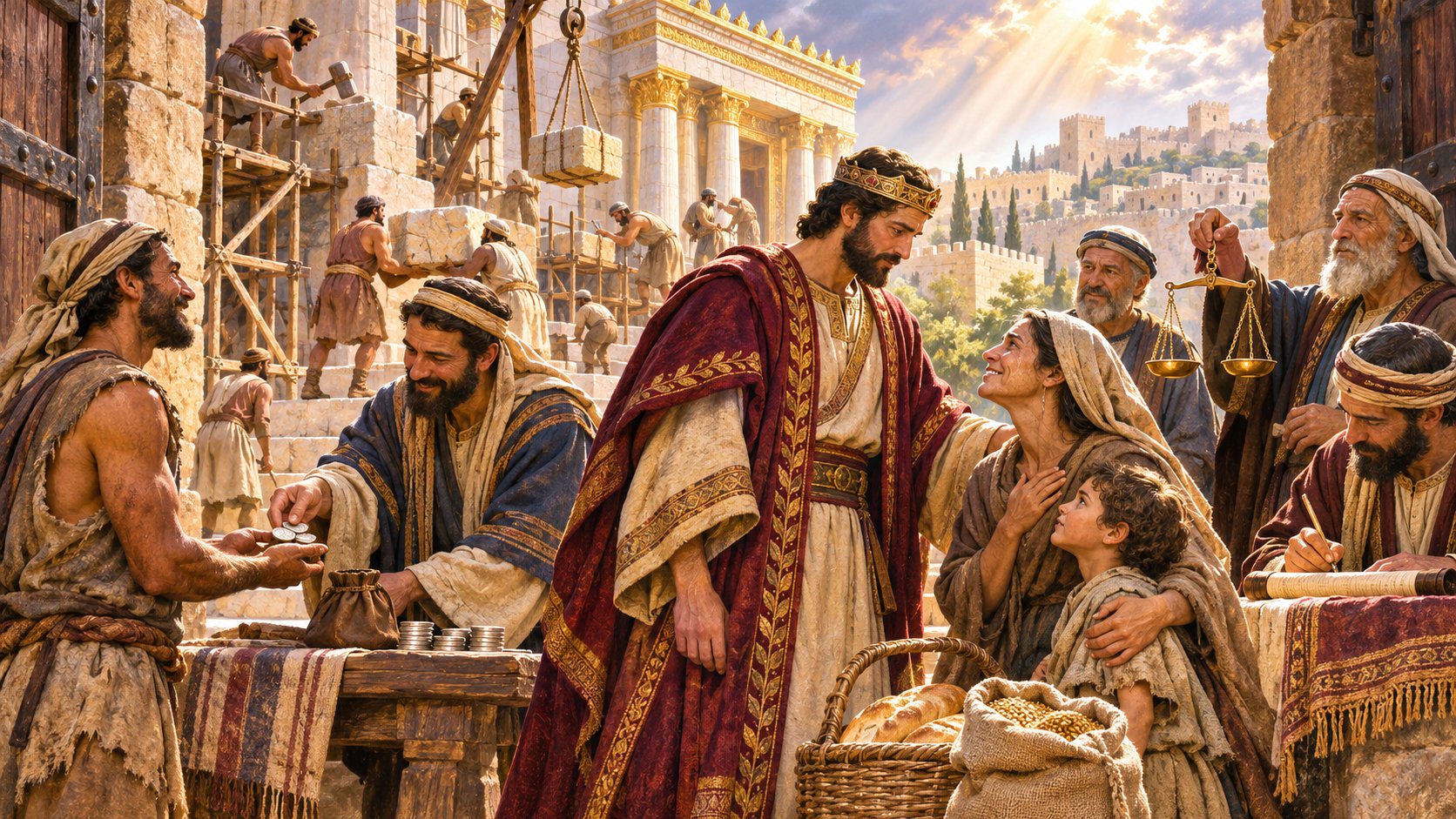
King Josiah, a man who practiced justice and righteousness and defended the cause of the poor and needy.—Jeremiah 22.
We can preach about God, worship God, quote Scripture, attend church, hold a religious office, and publicly profess to know Jesus Christ. But does our life demonstrate that we truly know Him, according to the Scriptures?
This question is raised repeatedly throughout the Word of God.
A remarkable passage in Jeremiah should confront every Christian, pastor, ministry leader, employer, businessman, government official, and anyone entrusted with authority. God speaks through the prophet Jeremiah about King Josiah, a man who practiced justice and righteousness and defended the cause of the poor and needy. The LORD asked an extraordinary question: “Was not this to know me? saith the LORD.” — Jeremiah 22:16 (KJV)
The LORD did not merely praise Josiah for his religious knowledge, his position as king, or his efforts to restore proper worship, but pointed to how Josiah exercised justice and treated the poor and needy. AND GOD CALLED THAT KNOWING HIM!
This is not an isolated statement. From Genesis to Revelation, Scripture establishes an unmistakable link between knowing God and practicing righteousness, justice, mercy, love, and obedience. Yet how frequently do we hear these matters preached with the same urgency that Scripture gives them?
How often do we hear religious leaders discuss financial prosperity, political influence, spiritual authority, anointing, revival, or miraculous power while giving comparatively little attention to God's explicit commands about justice, fair wages, oppression, corruption, and the treatment of vulnerable people? The Word of God does not permit us to separate these matters. And the example of Josiah exposes why.
1. KING JOSIAH: GOD'S DEFINITION OF KNOWING HIM
In Jeremiah 22:13–17, God delivers a severe rebuke against Jehoiakim, the son of King Josiah. Jehoiakim was building himself an impressive royal residence. He wanted spacious rooms, expensive materials, and the appearance of royal greatness. But God identified a serious problem. The king exploited others' labor without properly compensating them. Jeremiah 22:13 condemns the man who builds his house through unrighteousness and injustice, using his neighbor's labor without paying fair wages.
Consider the implications. This was not simply a disagreement about economic policy or architectural extravagance. God Himself condemned the exploitation of workers.
Jehoiakim wanted the benefits of their labor without fulfilling his obligations toward them. He wanted luxury through exploitation. Or in today’s language: “prosperity for me, but poverty for thee.” He also wanted the appearance of greatness while disregarding justice. Then God contrasted Jehoiakim with his father, Josiah.
Jeremiah 22:15–16 describes Josiah as a king who practiced judgment and justice, defended the poor and needy, and prospered in doing what was right. God then connected those actions directly to knowing Him.
Josiah's knowledge of God was demonstrated in his conduct toward other human beings. Notice something else. The contrast is not between a religious man and an irreligious man. It is about two kings of Judah who shared the same throne, inherited the same religious traditions, and operated within the same covenantal framework. One practiced righteousness and justice. The other exploited his people. One defended the poor and needy. The other pursued dishonest gain and abused his authority.
Religious heritage did not make Jehoiakim righteous. His father's faithfulness could not substitute for his own obedience. And it is just as true today. The evidence of whether we know God is found in the fruit.
What about the money used to repair the Temple? Consider another episode during Josiah's reign. In 2 Kings 22:3–7, King Josiah ordered the restoration of the house of the Lord. Money collected at the Temple was to be entrusted to those overseeing the work and used for the necessary repairs, including the work of carpenters, builders, and masons. The passage also says these administrators were trusted because they dealt faithfully, and that they did not need to account for the money they charged.
The parallel account in 2 Chronicles 34:8–13 includes the payment and oversight of the workers The Scriptures do not specify the exact wages they received. We should not claim more than the text establishes. Nevertheless, the account emphasizes responsible stewardship, faithful administration, and the proper use of money entrusted for the work.
Jeremiah offers God's broader assessment of Josiah's character: he practiced justice and righteousness. What a contrast to Jehoiakim, whose palace-building involved withholding wages. The lesson is unmistakable. God is concerned not only with what we build in His name, but also with how we treat the people who build it. That applies to churches, ministries, businesses, governments, and every other institution exercising authority over people.
2. GOD EXPLICITLY CONNECTS KNOWING HIM WITH JUSTICE, MERCY, AND RIGHTEOUSNESS
Jeremiah 22 is not the only passage where God makes this connection. In Jeremiah 9:23–24, God warns against boasting in wisdom, strength, or riches. Instead, He says that the person who boasts should boast in understanding and knowing Him.
Then God identifies what He Himself practices and delights in: Lovingkindness. Judgment. Righteousness. Think about that. When God describes what it means to know Him, He does not point to political power, financial influence, institutional prestige, or religious celebrity He points to His own character. He is the God who exercises lovingkindness, justice, and righteousness. And He delights in those things.
How can people claim to know this God while continually practicing the opposite? How can a Christian profess to know the God of justice while knowingly participating in injustice? How can any Christian leader preach about God's mercy while treating people under his authority without mercy? How can a religious leader proclaim righteousness while tolerating corruption, dishonesty, exploitation, or oppression? These are not secondary questions. They go directly to what Scripture says about knowing God.
Hosea 6:6 — Mercy rather than sacrifice God makes another direct statement through Hosea. “For I desired mercy, and not sacrifice; and the knowledge of God more than burnt offerings.” — Hosea 6:6 (KJV)
This does not mean that worship was unimportant under the covenant. Rather, religious observances offered without covenant faithfulness, mercy, and obedience were unacceptable to God. People could participate in sacrifices while failing to reflect the character of the God they claimed to worship. God rejected that hypocrisy. The contrast is devastating.
RELIGIOUS ACTIVITY IS NOT A SUBSTITUTE FOR KNOWING GOD. You can perform the outward acts of religion while your heart remains far from Him.
Micah 6:8 — What does God require? Micah asks what the Lord requires of man. The answer centers on doing justice, loving mercy, and walking humbly with God. Notice the verbs. DO justice. LOVE mercy. WALK humbly.
These are not mere theological concepts to be debated. They demand conduct. They require action. They govern how people wield power, manage money, exercise judgment, resolve disputes, and treat their neighbors. They also expose the absurdity of believing that outward religious activity can compensate for a life of unrighteousness.
3. GOD TAKES THE EXPLOITATION OF WORKERS PERSONALLY
One of the most neglected subjects in modern Christianity is God's repeated condemnation of mistreating workers. Scripture is remarkably specific about this. In Leviticus 19:13, God prohibits defrauding one's neighbor and withholding a hired worker's wages. In Deuteronomy 24:14–15, God commands His people not to oppress poor and needy hired workers, including foreigners living among them. The workers are to receive their wages promptly because they depend upon them Why? Because their livelihood matters to God.
These are not modern labor principles being artificially imposed upon ancient Scripture. They are commands found in the Word of God.
And the same concern appears centuries later. Malachi 3:5 — God will judge those who exploit workers. God announces judgment against several forms of wrongdoing. Among them are those who oppress hired workers by withholding their wages, mistreat widows and orphans, and deny justice to foreigners. God concludes by identifying these people as those who do not fear Him.
Do not miss the theological significance. God connects economic exploitation with a failure to fear Him. The way someone treats workers is not spiritually irrelevant. The way an employer handles wages is not separate from righteousness. The way a leader treats people who depend upon his decisions is not outside God's concern.
James 5 — The wages cry out: The New Testament is equally direct. James 5:1–6 contains one of the strongest condemnations of economic exploitation in all of Scripture. James addresses wealthy people who have amassed their riches through injustice. He specifically identifies the wages withheld from laborers.
Those unpaid wages are described as crying out, and the cries of the workers reach the ears of the Lord. Consider that picture. The employer may possess wealth, property, influence, and legal protection. The worker may possess very little. But the Lord hears.
THE LORD HEARS THE CRIES OF EXPLOITED WORKERS!
That should make every Christian employer, ministry administrator, business owner, and organizational leader examine how they treat people. A ministry cannot excuse exploitation by claiming its work serves God. A business cannot justify dishonest compensation merely because its owner professes Christianity. And a religious leader cannot make injustice righteous by labeling it sacrifice, service, or submission. God's Word does not provide such exceptions.
4. GOD DEFENDS PEOPLE WHO CANNOT DEFEND THEMSELVES
From the Law of Moses through the prophets, God repeatedly identifies particular groups whose vulnerability makes them susceptible to exploitation. These are: The poor. The fatherless. Widows. Foreigners. The oppressed. Those without power or influence. Those whose rights can easily be disregarded.
Exodus 22:21–24 specifically warns against mistreating foreigners, widows, and fatherless children. God declares that if they cry out to Him, He will hear them.
Deuteronomy 10:17–19 describes God as impartial, as One who executes justice for the fatherless and widows, and as One who loves the foreigner.
Psalm 146:5–9 describes the Lord as the defender of the oppressed, the provider of food for the hungry, and the protector of foreigners, orphans, and widows.
Psalm 82:3–4 commands the defense of the poor and fatherless and the rescue of the afflicted and needy.
Proverbs 31:8–9 commands speaking for those who cannot speak for themselves and defending the rights of the poor and needy.
These are repeated expressions of God's character. God does not measure human worth according to wealth, political influence, institutional position, or social standing. And those who claim to know Him are expected to reflect His concern for people whom others are tempted to disregard. This principle has implications far beyond charitable giving.
It concerns honest judicial proceedings. It concerns false accusations. It concerns bribery and corruption. It concerns abuse of authority. It concerns the exploitation of people who cannot afford to defend themselves. And it concerns powerful institutions that use their resources and influence to deny justice to the powerless.
Scripture does not give leaders permission to abuse people merely because they possess lawful or institutional authority. In fact, those possessing authority are repeatedly warned that they will answer to God for how they exercise it.
5. GOD CONDEMNS UNJUST GOVERNMENT AND CORRUPT LEADERSHIP
The prophets did not restrict their rebukes to private morality. They directly confronted kings, government officials, judges, wealthy landowners, and religious leaders.
Isaiah 10:1–3 condemns those who establish unjust decrees and deprive vulnerable people of their rights.
Amos 5 condemns those who accept bribes, exploit the poor, and turn justice aside.
Micah 3 confronts leaders who should understand justice but instead exploit the people entrusted to them.
Jeremiah 22 commands Judah's royal house to practice justice and righteousness and to deliver victims from their oppressors.
And Ezekiel 22 condemns princes, priests, prophets, and ordinary citizens for violence, corruption, extortion, and oppression.
These passages reveal something about the nature of governmental and institutional accountability.
Having authority does not make someone's actions righteous. Having a title does not establish integrity. Holding a leadership position does not place a person above God's standards. And maintaining a public appearance of righteousness does not hide wrongdoing from God.
Consider the example in Nehemiah 5. Nehemiah learned that wealthy and powerful Israelites were exploiting their own people through financial practices that left families impoverished and desperate. He did not dismiss their complaints, nor did he instruct the victims to remain silent to preserve public unity. He confronted the nobles and officials and demanded restitution. That is leadership demonstrating justice.
Consider 1 Kings 21. King Ahab and Queen Jezebel used false accusations and corrupted legal proceedings to seize Naboth's vineyard. Their actions involved the abuse of authority, false witnesses, judicial wrongdoing, and the destruction of an innocent man. God sent Elijah to confront Ahab.
God did not regard the king's authority as a justification for the injustice committed under that authority. This principle matters enormously wherever powerful people or institutions claim the right to decide what is acceptable simply because they have the means to enforce their decisions. The Bible repeatedly makes clear that power is accountable to righteousness.
6. GOD REJECTS WORSHIP THAT COEXISTS WITH INJUSTICE
This is where the Scriptures become profoundly uncomfortable. In Isaiah 1:10–17, God confronts people who continue engaging in religious assemblies, prayers, and sacrifices while tolerating wrongdoing. God commands them to cease doing evil, learn to do good, seek justice, correct oppression, defend the fatherless, and plead for widows.
The problem was not the act of worship itself. The problem was the contradiction between their worship and their conduct. THEY WERE RELIGIOUS, BUT THEY WERE UNRIGHTEOUS.
In Amos 5:21–24, God rejects religious celebrations and offerings because justice and righteousness are absent. He calls instead for justice and righteousness to flow abundantly.
Then there is Isaiah 58 The people are fasting. They are performing religious acts. They appear eager to seek God. But God exposes their hypocrisy While they fast, they exploit workers and engage in strife. God asks whether that is the kind of fast He has chosen.
He then describes a very different kind of fasting: breaking the bonds of wickedness, undoing oppression, feeding the hungry, sheltering the poor, and clothing the naked This is an extraordinary rebuke.
People were seeking spiritual approval while simultaneously practicing injustice. God refused to separate their religious activity from their treatment of other human beings.
Now consider the implications for the modern Church. What good is a public display of worship if the same people willingly engage in deception and oppression? What does a declaration of revival mean if those making it practice wickedness? What does it mean to demand righteousness from the government while neglecting righteousness within our own institutions What does it mean to speak about spiritual authority while demonstrating little concern for fairness, honesty, mercy, or justice?
The prophets leave no room for the argument that religious activity excuses unrighteous conduct.
7. JESUS CHRIST REAFFIRMED THESE VERY PRINCIPLES
Some may be tempted to dismiss these passages as matters belonging exclusively to the Old Testament. But Jesus Christ Himself directly affirmed them.
Consider Matthew 23:23. Jesus rebuked the scribes and Pharisees for meticulously observing certain religious requirements while neglecting what He called the weightier matters of the Law.
Those matters were: JUSTICE. MERCY. FAITH.
Jesus did not say they should abandon every other religious responsibility. He condemned their neglect of what mattered most.
And in Luke 11:42, Jesus connected justice with the love of God. Think about that relationship. Justice. The love of God. These are not opposing concepts. They belong together.
The Good Samaritan — Luke 10:25–37
Consider the parable of the Good Samaritan.
A man is assaulted, robbed, and left injured by the roadside.
A priest sees him.
He passes by.
A Levite sees him.
He also passes by.
Both men have religious identities.
Both are associated with the worship and service of God.
Yet neither offers help.
Then a Samaritan comes upon the injured man.
He has compassion.
He treats the man's wounds.
He transports him to safety.
He pays for his care.
He makes provision for additional expenses.
Jesus uses the Samaritan to show what it means to love one's neighbor.
Notice what distinguishes him.
It is not his religious title.
It is not his institutional position.
It is not a public declaration of spiritual superiority.
IT IS COMPASSION EXPRESSED THROUGH ACTION.
And Jesus concludes by commanding His listener to do likewise.
Then we have the sheep and the goats — Matthew 25:31–46. In Matthew 25, Jesus describes the Son of Man separating the sheep from the goats. The account identifies practical acts of mercy toward those in need. Feeding the hungry. Giving drink to the thirsty. Welcoming the stranger Clothing the naked. Visiting the sick. Coming to those in prison.
The passage has important interpretive questions concerning the identity of those Jesus calls His brethren, and it should not be reduced to a doctrine of salvation earned through charitable acts. Nevertheless, one truth is unmistakable. Jesus takes the treatment of others with extraordinary seriousness. And He identifies the conduct of those being judged as having profound significance in relation to Himself.
The rich man and Lazarus — Luke 16:19–31. Jesus also describes a rich man living in luxury while a suffering beggar lies at his gate. The contrast is stark. One possesses abundance, while the other suffers in desperate need. The account warns against a life of self-indulgence that remains indifferent to suffering. It is not a condemnation of wealth merely because someone is wealthy. It is a confrontation with a heart that has no meaningful concern for the suffering immediately before it. And Jesus repeatedly exposes that problem.
8. JOHN THE BAPTIST: REPENTANCE REQUIRES MORE THAN WORDS
Before Jesus began His public ministry, John the Baptist called people to repentance. In Luke 3:7–14, he demanded fruit consistent with that repentance.
Different groups asked him what they should do, and his answers were remarkably practical. Those with extra clothing or food were told to share with people in need. Tax collectors were told not to demand more money than they were authorized to collect. Soldiers were told not to extort money, make false accusations, or abuse their position. Notice the specificity. John addressed greed, economic exploitation, false accusations, the misuse of coercive authority, and generosity toward the needy.
JOHN DID NOT TREAT REPENTANCE AS A RELIGIOUS SLOGAN.
He expected it to change conduct. A corrupt tax collector could not simply continue cheating people while proclaiming repentance. A soldier could not continue extorting citizens and fabricating accusations while claiming to be spiritually transformed. And those with abundance were expected to consider those living in need. That is a direct challenge to every religious culture that emphasizes public profession while tolerating habitual injustice.
9. THE APOSTLES TAUGHT THE SAME THING
The coming of Jesus Christ did not diminish the importance of justice, mercy, righteousness, and love. The New Testament Church was expected to demonstrate those values.
In Acts 2:44–45 and Acts 4:32–35, believers voluntarily shared resources to meet needs within their community.
In Acts 6:1–6, a complaint arose because Greek-speaking widows were being overlooked in the daily distribution of assistance.
The apostles did not simply dismiss the complaint as divisive. They established a process to address the problem. That matters.
An inequity within the Church required practical correction. The apostles recognized that faithful ministry included ensuring that vulnerable people were not neglected.
James: Religion that God accepts. James 1:27 identifies care for orphans and widows in their distress as part of pure and undefiled religion before God. James 2 condemns favoritism toward wealthy people.
Then James presents the example of someone who lacks food or clothing. What good is it to offer religiously comforting words while refusing to provide practical assistance when one is able? James challenges the idea that faith can remain entirely disconnected from action.
And in James 5, as already noted, he delivers a severe warning against wealthy people who defraud workers of their wages. This is apostolic Christianity. Not an alternative Gospel. Not a substitute for the Gospel. But instruction concerning the conduct expected of people who profess faith in Jesus Christ.
John: You cannot claim to love God while hating your brother. First John repeatedly connects knowing God with obedience, righteousness, and love. In 1 John 2:3–6, John explains that obedience is evidence of knowing God. In 1 John 3:10, he distinguishes the children of God by righteousness and love. In 1 John 3:16–18, he explains that love should be demonstrated through action rather than words alone. He specifically considers the case of someone possessing material resources who sees a brother in need yet closes his heart against him.
Then, in 1 John 4:20–21, John exposes the contradiction of claiming to love God while hating one's brother. The argument is simple. You cannot credibly profess love for the God you cannot see while refusing to love the brother you can see.
And Titus 1:16 makes an equally direct statement about those who profess to know God but deny Him through their actions. This brings us directly back to Jeremiah 22. Knowing God is not established merely by what a person says. The profession must be consistent with the conduct.
10. BUT LET US BE ABSOLUTELY CLEAR: GOOD WORKS DO NOT SAVE ANYONE
At this point, a crucial theological distinction must be maintained. The Gospel of Jesus Christ is not a message of salvation through social justice, charitable giving, humanitarian work, or personal morality.
No amount of charitable activity can wash away sin No quantity of good works can purchase forgiveness. No human effort can replace the cross of Jesus Christ The Gospel is clearly declared by the Apostle Paul in 1 Corinthians 15:1–4. Jesus Christ died for our sins according to the Scriptures. He was buried. He rose again on the third day according to the Scriptures. THAT IS THE GOSPEL!
Romans 1:16–17 identifies the Gospel as the power of God unto salvation for everyone who believes. Ephesians 2:8–9 establishes that salvation is by grace through faith, not a reward earned through works. And Ephesians 2:10 immediately explains that believers are created in Christ Jesus for good works. Do not separate these truths.
We are not saved BY good works. We are saved UNTO good works. We do not practice righteousness to purchase salvation. We practice righteousness because the grace of God transforms the lives of those who belong to Jesus Christ. Titus 2:11–14 connects the grace of God with a life that rejects ungodliness and pursues righteousness and good works. Titus 3:4–8 makes the same distinction.
God saves according to His mercy, not our works of righteousness, and believers are then exhorted to devote themselves to good works. This distinction protects the Gospel from being reduced to moral improvement or political activism. But it also prevents professing Christians from using salvation by grace as an excuse for continued, unrepentant wrongdoing.
GRACE IS NOT PERMISSION TO PRACTICE INJUSTICE. And faith is not a license to abandon mercy.
11. THIS IS A DIRECT CONFRONTATION WITH RELIGIOUS HYPOCRISY
Now consider the implications for our own generation It is entirely possible to construct an impressive religious organization while mistreating the people who sustain it. It is possible to preach about biblical prosperity while withholding fair compensation from workers. It is possible to speak about integrity while protecting corrupt leadership. It is possible to demand accountability from government while refusing accountability within the Church. It is possible to proclaim the importance of righteousness while participating in false accusations, dishonesty, favoritism, intimidation, or abuse It is possible to accumulate wealth, political access, media influence, and institutional prestige while neglecting the poor and needy. And it is possible to claim that all of this is being done in the name of God.
But what does Scripture say?
Jeremiah 22 confronts the exploitation of workers.
Jeremiah 9 identifies justice, righteousness, and lovingkindness with knowing God.
Hosea 6 prioritizes mercy and the knowledge of God over outward sacrifice.
Micah 6 commands justice, mercy, and humility.
Isaiah 58 condemns religious observances accompanied by oppression.
Amos 5 condemns worship divorced from righteousness.
Matthew 23 identifies justice, mercy, and faith among the weightier matters of the Law.
James 5 condemns the fraudulent withholding of wages.
First John declares that love for God must be reflected in love for others.
HOW MANY MORE SCRIPTURES DO WE NEED BEFORE WE TAKE GOD SERIOUSLY?
This has nothing to do with whether someone identifies as politically conservative or liberal. It has nothing to do with whether someone belongs to a Republican or Democratic constituency. It has nothing to do with whether an institution has wealth, influence, or a prominent religious brand.
GOD'S STANDARDS ARE NOT SUBJECT TO POLITICAL OR INSTITUTIONAL LOYALTY. A Christian does not receive permission to defend unrighteousness merely because the perpetrator belongs to a preferred political party, ministry, denomination, or organization.
Wrongdoing does not become righteous simply because it is committed by someone we admire. Exploitation does not become acceptable merely because it is carried out by someone who shares our religious vocabulary. And injustice does not become just simply because it serves an outcome we desire. The Scriptures do not instruct believers to practice selective righteousness. They call us to obedience.
What about those demanding good government? There is a glaring contradiction among religious leaders who publicly demand honest and righteous government while refusing to confront injustice within their own institutions. They demand accountability from political opponents but excuse misconduct among political allies. They condemn corruption when it serves their interests but remain silent when it occurs among those who provide access, money, or influence. They speak about religious liberty and biblical values but may neglect the people actually suffering from abuse, exploitation, or the misuse of authority. Such conduct must be examined against the same Scriptures they claim to defend.
YOU CANNOT CLAIM TO STAND FOR BIBLICAL RIGHTEOUSNESS WHILE PRACTICING SELECTIVE RIGHTEOUSNESS. God's commands do not change according to the identity of the offender. This does not mean every accusation is true. Justice also requires truthful evidence, due process, impartiality, and protection against false allegations. Scripture condemns both oppression and false accusation.
But protecting an accused person from false claims is not the same as shielding proven wrongdoing from accountability. And refusing to investigate credible allegations merely because they threaten powerful interests is not biblical justice. There is a profound difference between defending the truth and defending an institution's reputation at the expense of the truth.
12. KNOWING GOD IS NOT THE SAME AS KNOWING ABOUT GOD
Here is the central issue. There is a difference between possessing information about God and living in a genuine relationship with Him. A person can know biblical history. A person can memorize Scripture. A person can explain doctrines. A person can preach sermons, write books, lead worship services, organize conferences, and hold religious leadership positions. But none of those accomplishments, by themselves, proves that the person knows God.
Jesus warned of this in Matthew 7:21–23. He described people who would appeal to their religious activities and remarkable works while being rejected because of their relationship to lawlessness. Their public religious accomplishments did not establish obedience to Him. That warning should sober anyone involved in ministry.
Spiritual authority is not proved by a platform. Biblical knowledge is not proved by a title. And genuine discipleship is not proved by institutional success.
Jesus taught that His disciples would be recognized by their love for one another (John 13:34–35). He taught that those who love Him will keep His commandments (John 14:15). John taught that those who claim to know God must walk in obedience to Him (1 John 2:3–6). And Paul taught that even the exercise of extraordinary spiritual gifts is worthless without love (1 Corinthians 13:1–3).
KNOWING ABOUT GOD IS NOT THE SAME AS KNOWING HIM. That knowledge must produce fruit. Not perfection in this present life. Not a claim of sinlessness. Not an exemption from mistakes. But a transformed life marked by repentance, obedience, righteousness, mercy, love, and an increasingly faithful reflection of the character of Jesus Christ.
And when wrongdoing is exposed, genuine repentance requires more than an apology Where restitution is owed, restitution should be made. Where workers have been defrauded, the injustice should be corrected. Where authority has been abused, accountability should follow. Where vulnerable people have been harmed, their protection and restoration should matter.
Zacchaeus demonstrated precisely this principle in Luke 19:1–10. His encounter with Jesus produced a concrete commitment to generosity and restitution. His response was not merely verbal. His conduct changed.
13. WHAT DOES GOD REQUIRE OF HIS PEOPLE TODAY?
The answer is not complicated. Preach the Gospel of Jesus Christ faithfully. His incarnation, death, burial, resurrection, ascension, return, and Kingdom. Preach repentance and faith in Jesus Christ. Preach salvation by grace through faith. Preach the transforming power of the Gospel of Jesus Christ. But also teach believers to obey everything Jesus commanded, as required by Matthew 28:18–20.
That obedience includes how we treat one another. It includes how we handle money, how we compensate workers, how we exercise authority, and how we respond to corruption.
It includes whether we defend those being exploited, how we treat people who cannot offer us anything in return, whether we show mercy when mercy is required, and whether we judge impartially or show favoritism to people possessing wealth, influence, or power.
It also includes whether we speak truth when falsehood would be more convenient, whether we protect institutional interests at the expense of righteousness, and whether we stand for justice even when doing so carries personal consequences.
This is not an alternative to Christian discipleship. THIS IS PART OF CHRISTIAN DISCIPLESHIP.
A Church that preaches salvation yet fails to teach the righteousness, love, and obedience that should follow it is neglecting essential biblical instruction. A ministry that proclaims spiritual power while tolerating exploitation contradicts the very Lord it claims to represent. And an individual who demands righteousness from everyone else while exempting himself from God's commands should carefully examine whether his confidence rests in Christ or in religious self-deception.
14. THE SOLUTION IS REPENTANCE: TO RETURN TO JESUS CHRIST AND HIS WORD.
Preach the Gospel in its fullness. Call sinners to repentance. Teach the righteousness of God. Practice justice. Love mercy. Walk humbly before the Lord. Care for the poor and needy. Treat workers fairly. Reject dishonest gain. Refuse corruption. Defend those whose legitimate rights are being violated. Exercise authority with integrity. And hold ourselves to the same Scriptural standards we demand of others.
First Peter 4:17 warns that judgment begins at the house of God. That should put an end to the idea that the Church's primary responsibility is to identify everyone else's wickedness while refusing to examine its own. The Church is called to be holy. The Church is called to speak the truth. The Church is called to love. The Church is called to demonstrate the transforming work of Jesus Christ. And the Church is called to live under the authority of the Word of God—not above it.
CONCLUSION: “WAS NOT THIS TO KNOW ME?”
Return once more to Jeremiah 22:15–16.
God examined the reign of King Josiah.
He identified a man who practiced justice and righteousness.
He identified a man who defended the cause of the poor and needy.
And God declared that this conduct demonstrated knowing Him.
Think about the weight of that statement.
Not knowing a religious system.
Not possessing an impressive title.
Not accumulating wealth.
Not exercising political influence.
Not building a magnificent institution.
KNOWING HIM.
And Jesus Christ, centuries later, condemned religious leaders for neglecting justice, mercy, and faith.
The same moral truth runs through both Testaments.
God is righteous. God is just. God is merciful. God is love.
And those who profess to know Him must not treat His character as irrelevant to their conduct.
Let the Church hear this clearly.
IF WE PREACH RIGHTEOUSNESS, WE MUST PRACTICE RIGHTEOUSNESS.
IF WE PREACH MERCY, WE MUST SHOW MERCY.
IF WE PREACH JUSTICE, WE MUST PRACTICE JUSTICE.
IF WE PREACH THE LOVE OF GOD, WE MUST LOVE ONE ANOTHER.
IF WE CLAIM TO KNOW JESUS CHRIST, OUR LIVES MUST BE CONSISTENT WITH HIS COMMANDMENTS.
“BEAR FRUIT WORTHY OF REPENTANCE.”—Luke 3:8 NKJV

