
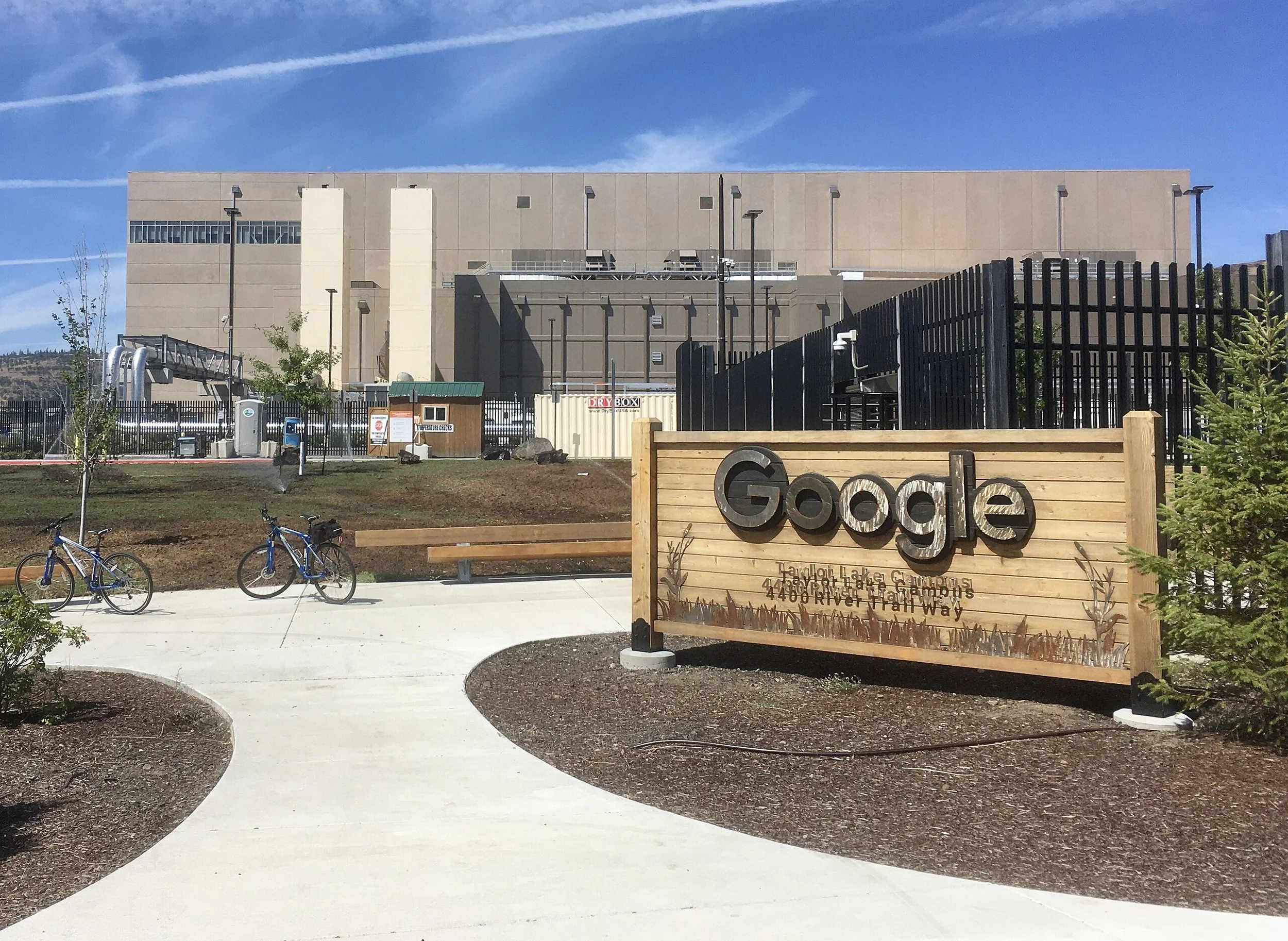
Google data center in The Dalles, Oregon, 16 October 2021, credits to Wikimedia Commons.
As a resident of Tulsa, I am concerned about the increasing resistance to data centers in our community and nearby areas. Concerns about rising electricity costs, overburdened resources, and environmental effects are widespread, but many of these claims are exaggerated or false. The reality is that, when constructed responsibly, data centers offer a unique opportunity for economic growth and infrastructure development in Oklahoma, representing an unparalleled opportunity for economic and infrastructural transformation.
Data centers can boost our community from ongoing struggles to a hub of innovation and prosperity. Based on my experience living in Loudoun County, Virginia, the undisputed data center capital of the world, I have seen how these facilities can transform an underdeveloped region into one of the wealthiest in the country. It’s time for Oklahomans to embrace this opportunity.
Let’s start with the facts. Data centers aren’t just warehouses for servers; they’re engines of economic growth. In Loudoun County, where I lived from 2002 to 2019, the industry expanded rapidly from a few facilities to over 200 today. This surge has created tens of thousands of jobs—78,140 statewide in Virginia as of 2023—and contributed $31.4 billion to the economy. In 2018 alone, Virginia’s data centers supported 14,644 full-time-equivalent positions and paid out $1.9 billion in wages.
These aren’t low-skill jobs; they offer high-paying roles in tech, engineering, construction, and maintenance, boosting average wages and attracting talent. Property values rise as a result—my own townhouse, bought for $101,000 in 2002 and sold for $350,000 in 2019, is now valued around $500,000, thanks to the influx of wealth and development.
But the benefits extend far beyond individual gains. Data centers demand robust infrastructure, which prompts upgrades that benefit everyone. In Loudoun, gravel roads were paved into four-lane highways, power grids were reinforced to withstand severe weather (a 30-inch snowstorm caused no outages, and roads reopened in two days), and communication networks were expanded. They even extended the Washington D.C. Metro system to the area, enhancing connectivity and quality of life.
Tax revenues surged—$890 million annually from data centers alone, covering nearly the entire county’s operating budget and enabling lower property tax rates per $1,000 of assessed value compared to what I pay in Tulsa. For every dollar invested in these facilities, Loudoun gains $26 in tax revenue, supporting better schools, roads, and public services. My daughter attended outstanding schools there in first and second grade—state-of-the-art facilities with competitive pay for teachers that attracted families from across the region.
Contrast this with Oklahoma’s current situation. Our state consistently ranks near the bottom nationally: 42nd overall in U.S. News & World Report’s Best States, with low scores in health care, education (49th overall, 50th in quality), and infrastructure. We are 46th in child well-being, including 48th in education and 40th in economic opportunity. Crime rates remain high, wages lag, and economic prospects remain limited.
A major snowstorm here could likely cause widespread power outages and make roads impassable for a week or more, exposing our vulnerable grid. We can’t keep relying on retail stores, Mexican restaurants, car washes, and cannabis dispensaries to drive progress since these contribute little to long-term growth. The technological era demands more, and data centers are a key piece of that puzzle.
Look at what we’ve already missed. Tulsa was a strong contender for Tesla’s new headquarters, but Elon Musk ultimately chose Austin, Texas, citing its larger talent pool, bigger state incentives, no income taxes, proximity to the University of Texas, and better business environment. Austin’s site is just five minutes from the airport and 15 minutes from downtown, combining accessibility with quality of life. That decision brought thousands of jobs and billions in investment to Texas. Opportunities Oklahoma let slip away. If we keep resisting modernization, we’ll keep losing out.
Of course, concerns about data centers are valid, and recent discussions in Tulsa highlight worries over power grid strain, water usage (up to 5 million gallons per day for cooling in some cases), and higher utility costs. Tulsa already has 26 facilities operating or under construction, and state leaders are studying their impacts on resources. But these issues can be managed effectively when done properly. I lived just half a mile from a data center in Loudoun with zero disruption: no noise, no visual blight, no impact on my daily life.
The key is smart planning: avoid building next to residential areas, invest in efficient cooling technologies, and use tax revenues to help cover grid upgrade costs. In Virginia, energy demands are expected to triple, but the economic benefits—creating 74,000 new jobs and generating $5.5 billion in labor income—greatly outweigh the costs. Oklahoma can follow this example, turning potential challenges into shared advantages like stronger utilities and the integration of renewable energy.
Oklahomans face a clear choice: cling to the status quo and remain stuck in the bottom percentiles for education, crime, wages, infrastructure, and opportunity, or seize the moment to modernize. Data centers will be built somewhere in this digital age. Why not here, where they can help fund better schools, safer streets, and higher-paying jobs? By welcoming them responsibly, we can transform our state into a beacon of progress, much like Loudoun County did. The time to act is now; let’s build a brighter future for Oklahoma.

